
DISASTER MANAGEMENT & CLIMATE CHANGE ADAPTATION:






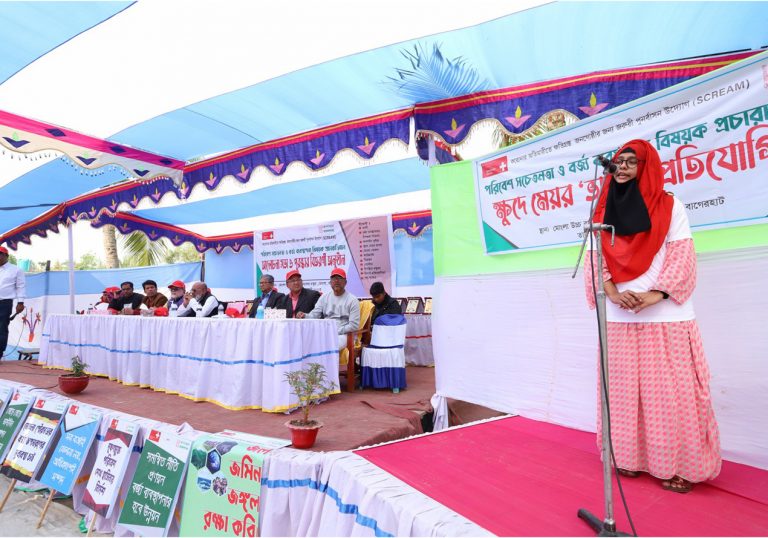

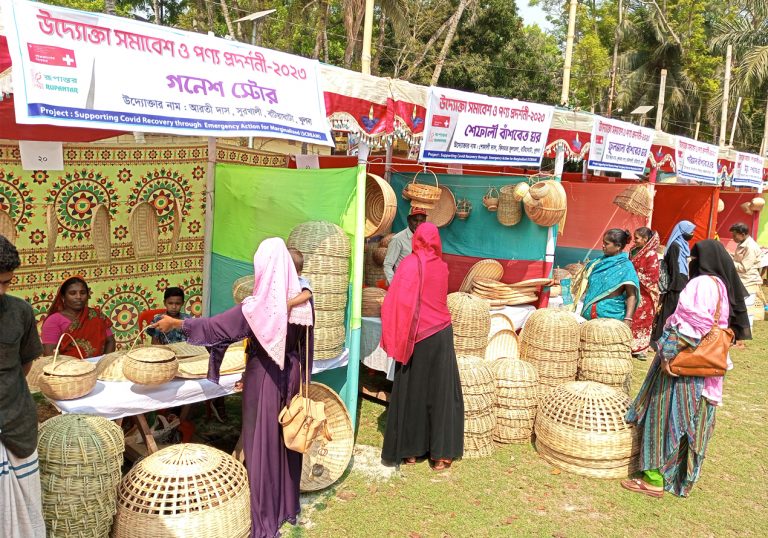


Rupantar’s disaster management and climate change adaptation program initiated operations in 2004, working in the southwestern coastal belt of Bangladesh, adjacent to the Sundarbans, the world’s largest mangrove forest and a natural barrier that shields millions of coastal people from the full force of cyclones and tidal surges. From its earliest years, the program was shaped by direct frontline response to the most catastrophic climate events in the region’s recent history: Cyclone Sidr in 2007, and most devastatingly, Cyclone AILA on 25 May 2009, which struck directly across Rupantar’s operational districts of Satkhira, Khulna, and Bagerhat, collapsing embankments, engulfing villages in saline tidal surges, and destroying every safe water source overnight.
What Rupantar’s teams encountered in the aftermath of AILA permanently reshaped the organisation’s direction. Communities with no diversified, resilient water and sanitation systems suffered the most. Women and girls bore the full burden of survival, walking hours for water amid the wreckage. A single-technology solution would never be enough. That insight became the foundation of Rupantar’s integrated approach to climate resilience.
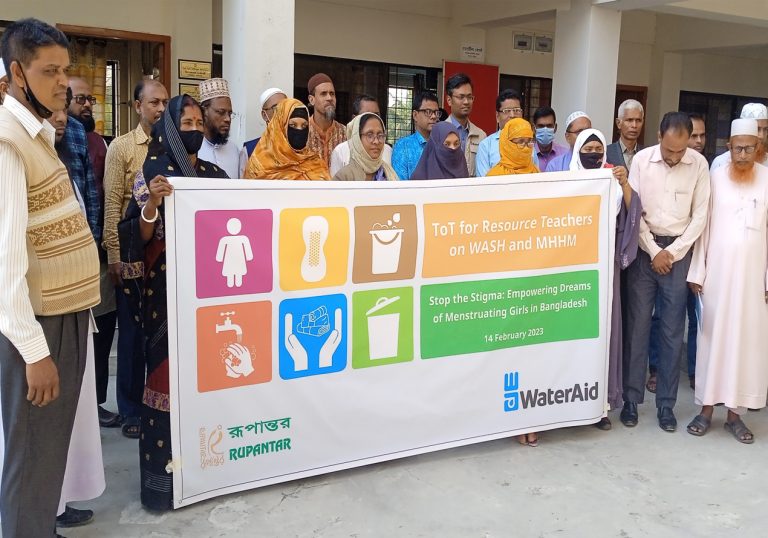
Today, the program covers the full disaster management cycle spanning prevention, mitigation, preparedness, response, and recovery. Its core priorities are climate-resilient water, sanitation, and hygiene (WASH) infrastructure; women’s leadership in community water governance; climate-adaptive livelihoods for vulnerable households; strengthening local institutions and disaster management systems; and the protection of the Sundarbans ecosystem through sustained community engagement. Rupantar works in close alignment with the Government of Bangladesh’s disaster management and climate policies, and contributes directly to SDG 6 (Clean Water and Sanitation), SDG 13 (Climate Action), and SDG 5 (Gender Equality).
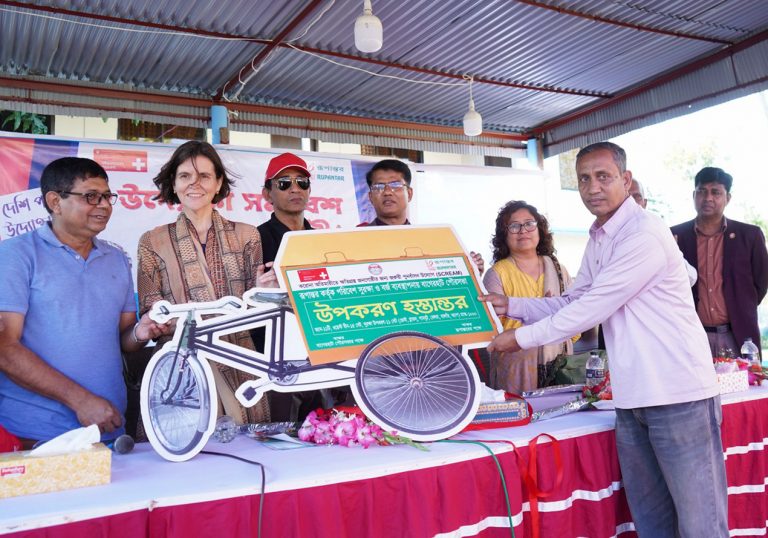
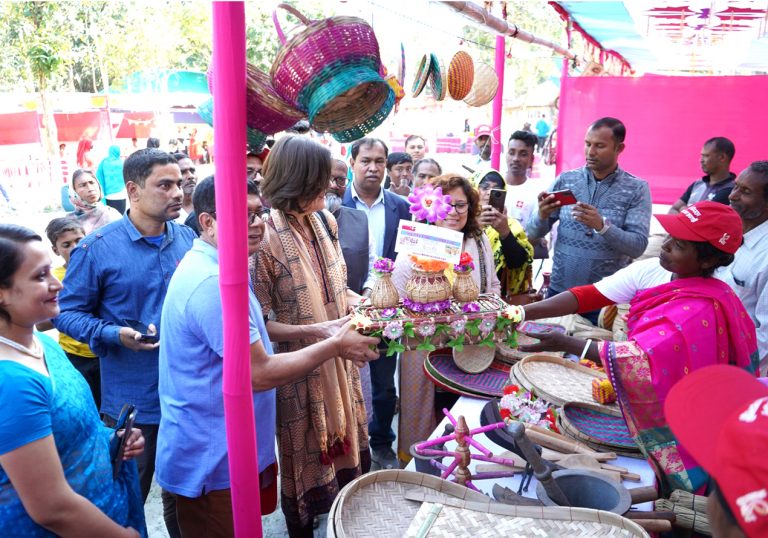
David Regan – Chief Executive Officer (CEO) of Concern was thrilled to visit Rupantar’s Collective Responsibility, Action and Accountability for Improved Nutrition (CRAAIN)
20+ Years of climate and WASH programming | 100,000+ People reached through water and sanitation | 3 Districts: Satkhira, Khulna, Bagerhat | 2004 Year program was initiated |
Strategic Approach
Rupantar’s disaster management and climate adaptation work is grounded in the following principles:
- Integrated and multi-hazard programming. Addressing cyclones, salinity intrusion, seasonal water scarcity, and climate-induced displacement as interconnected challenges, not isolated events.
- WASH at the center of resilience. Treating water, sanitation, and hygiene as foundational to community survival, recovery, and long-term climate adaptation in coastal zones.
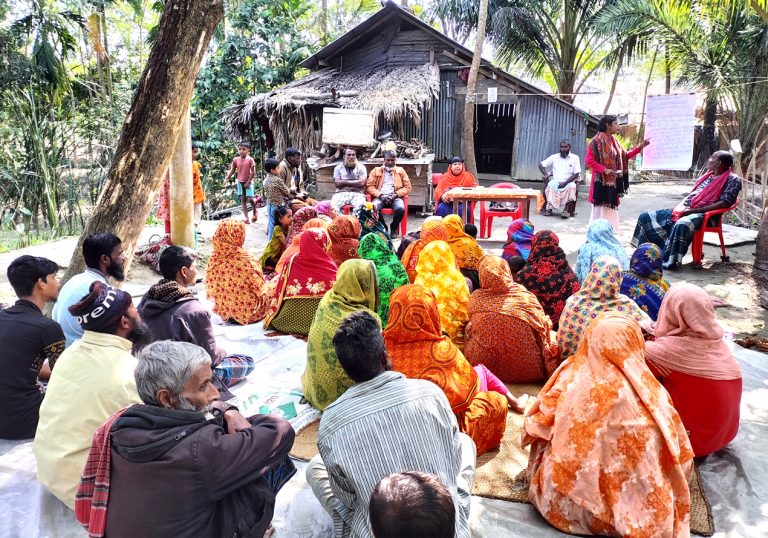
- Women’s leadership and inclusion. Centering women not only as the most affected by water and sanitation crises, but as primary agents of community resilience and system management.
- Community ownership and self-sufficiency. Building systems that communities can operate, maintain, and sustain beyond the project cycle, eliminating dependency on continuous external support.
- Sundarbans stewardship. Embedding mangrove ecosystem protection and conservation-linked livelihoods into community programming, connecting forest health directly to community water and climate security.
- Government alignment. Complementing Government of Bangladesh priorities, including the National Disaster Management Policy, the Coastal Zone Policy, and national SDG commitments.
- Evidence-based learning. Using participatory vulnerability assessments, joint needs assessments, and community-level data to continuously strengthen implementation.
Integrated Solution: Four Pillars, One System
For water-insecure coastal communities facing salinity intrusion, cyclone devastation, and seasonal dry spells, no single technology is sufficient. Rupantar’s response is an integrated four-pillar system combining proven technology, ecological restoration, and women’s entrepreneurship into a single, self-sustaining community water utility. The four pillars work together across every season to ensure that no household is ever left without access to safe water.
01 Solar-Powered River Osmosis
Solar-powered reverse osmosis units installed on riverbanks treat saline river water into safe drinking water with zero dependence on grid electricity. These units serve as the backbone of the system during peak dry season and in the immediate aftermath of cyclone flooding, when all other sources fail, delivering safe water year-round, off-grid and climate-proof.
02 Community Pond Re-Excavation and Restoration
Traditional community ponds degraded by siltation, cyclone damage, and land-use change are re-excavated and restored with protective embankments, salinity barriers, and inlet controls. Handed back to community management committees, a restored pond carries a functional lifespan of 20 to 30 years with no external energy input, grounding modern resilience in a centuries-old local water tradition.
03 Rainwater Harvesting
Household and community rainwater collection systems, comprising roof catchment, sealed storage tanks, and basic filtration, capture monsoon rainfall and extend its use three to four months into the dry season. This low-cost, community-managed intervention bridges the seasonal water gap that leaves coastal families most vulnerable.
04 Women Entrepreneurs for Water Empowerment (WE WE Model)
The WE WE Model trains and organises groups of women to operate and manage the water system as a social water business. Women collect household water fees, manage maintenance schedules, oversee pond governance, and reinvest revenue into system upkeep. Women who once spent half their day collecting water now earn income from providing it, making the system financially self-sustaining beyond donor funding.
Water Security
Coastal communities served by Rupantar now have year-round access to safe water through a diversified, multi-source system. No single cyclone, seasonal dry spell, or salinity surge can deprive them of safe water entirely, marking a fundamental shift from chronic water insecurity to structured water resilience.
Women's Empowerment
Women who once spent up to four hours daily collecting water have been transformed into trained water system managers and social entrepreneurs. Through the WE WE Model, they earn income, hold decision-making authority over community water assets, and lead the governance of systems their communities depend upon.
Healthier Communities
Sustained hygiene promotion alongside safe water and sanitation infrastructure has contributed to measurable improvements in community health outcomes, with reductions in waterborne disease incidence documented in served areas, particularly among children and women of reproductive age.
Ecological Restoration
Community ponds degraded for decades by salinity intrusion, shrimp farming, and cyclone damage have been restored to productive freshwater use. These ecologically sensitive interventions have revived a centuries-old water heritage while rebuilding natural freshwater reserves at the landscape level.
Stronger Institutions
Local disaster management committees and government bodies supported by Rupantar have demonstrated visibly improved coordination and response in subsequent disaster events. Strengthened institutions mean communities now enter each cyclone season more prepared, with clearer roles, better resources, and practised response systems.
Climate-Smart Livelihoods
Farming households on salinity-damaged land have adopted climate-adaptive cultivation techniques, restoring food production on land previously rendered unproductive. Income sources diversified through water entrepreneurship and adaptive agriculture have reduced household vulnerability to climate shocks.
Sundarbans Stewardship
Communities living at the edge of the Sundarbans have deepened their practice as active guardians of the mangrove ecosystem. Rupantar’s programming connects forest protection directly to community water security, building a constituency for long-term ecological conservation grounded in lived experience and self-interest.
Replicable Models
Rupantar’s integrated approach to climate-resilient WASH, including the WE WE community water utility model, has demonstrated replicability and scalability across diverse coastal contexts. The model offers a financially self-sustaining alternative to conventional project-based water delivery, with potential for adoption across all 19 coastal districts of Bangladesh.
Post-Donor Sustainability
Unlike most development interventions, Rupantar’s water systems are designed to remain operational after donor funding ends. Community fee structures, women-led management, and low-maintenance technology choices ensure that the investment continues to deliver safe water for decades, not just for the duration of a project cycle.
Development Partners
Rupantar’s disaster management and climate change adaptation program has been made possible through the sustained support of committed institutional development partners:
WaterAid Bangladesh | Swiss Government (SDC) | BMZ (German Federal Ministry) |
Helvetas | CARE Bangladesh | UNICEF Bangladesh |
UNDP Bangladesh | Canada Fund for Local Initiatives |
|